How to Fix Salt-Damaged Concrete and Protect It Long-Term
Protect your concrete from de-icing salt damage and repair it the right way for Mid-Atlantic winters.
Here in the Mid-Atlantic where freezing temperatures are part of the winter routine, de-icing products are essential for keeping walkways, driveways, and pool decks safer to navigate. But while these materials help prevent slips and falls, they can also be tough on concrete surfaces—causing scaling, spalling, and long-term deterioration if not managed properly. Understanding how de-icers interact with concrete, how to minimize potential damage, and what to do if problems arise can help you protect your investment season after season.
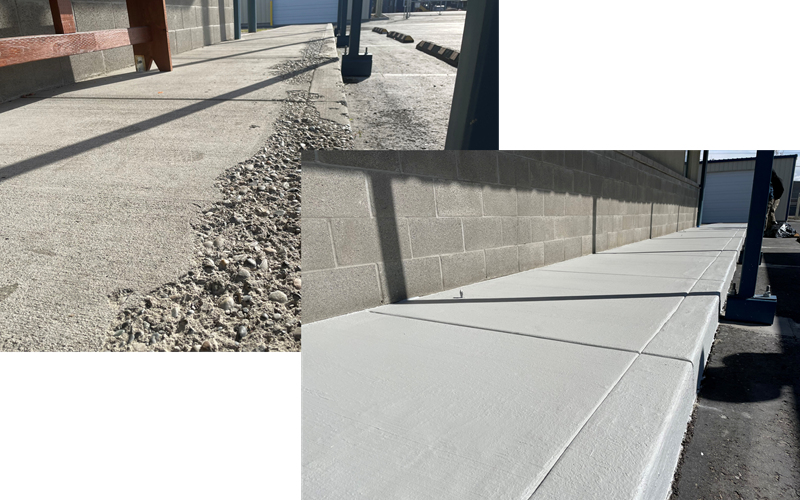 Before-and-after images show a concrete sidewalk damaged by de-icing, and how SUNDEK of Washington was able to repair and resurface the sidewalk to make it look like-new again.
How do de-icing salts damage concrete?
Concrete is known for its strength, but it’s also a porous material, so moisture and chemicals can work their way into its surface. When de-icing salts melt snow and ice, the resulting salty water seeps into those pores. As temperatures drop again, that trapped moisture freezes and expands, creating internal pressure that leads to scaling, cracking, and surface deterioration. Over time, repeated freeze-thaw cycles combined with salt exposure can significantly weaken the concrete, making early prevention essential.
Get a free quoteWhat are the signs of concrete that’s been damaged by de-icing salts?
De-icing salts used during DC-area winters can do a lot of damage. Some of the most common signs of damage from de-icing salts are discoloration, cracking, chipping, flaking, pitting, and scaling.
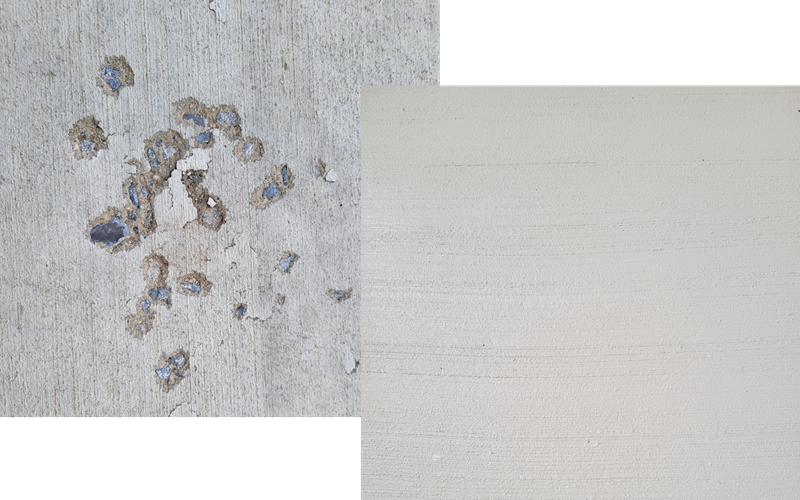 Closeup photos showing damage from de-icing salts (left). SUNDEK of Washington repaired the surface and applied an overlay with a broom finish, giving the concrete a smooth and refreshed look.
Related: Winter Concrete Maintenance
Ways to prevent damage from de-icing salts
Fortunately, there are several ways to protect your surface from the damage that de-icing salts cause. Below are some preventative measures you can take.
- Seal your surface and reseal it as needed. A sealer is the most important step you can take to protect your concrete. In addition to preventing damage from salt during freeze-thaw cycles, sealers prevent water from seeping in. Learn more about sealers.
- Use de-icers that are safe for concrete. While the best option would be to not use a de-icer, sometimes that’s just not possible. If you need one, opt for calcium chloride, which is the least harmful option available. Calcium chloride lowers the freezing point of water, which means that it’s less likely for ice to form. It’s also less harmful for the environment and surrounding plants. When applying it, make sure to distribute it evenly.
NOTE: Never use rock salt. The chemical reaction that occurs during freezing can lead to damage. - Check your drainage. When melted snow, slush, and ice build up on the surface, that can lead to salt damage. Having good drainage is helpful. If you find that your concrete slope isn’t ideal for drainage, you need to be more diligent about tending to areas where pooling occurs.
- Clean your concrete surface. In spots where you’ve used de-icers, clean concrete to remove salt when possible.
Featured Video
See How SUNDEK Fixes Salt-Damaged Concrete
De-icing salts can cause serious scaling, spalling, and cracking over time. Watch how SUNDEK of Washington repairs salt-damaged concrete and helps protect it for the seasons ahead.
Ready to fix your surface?
Get a free quote hereWhat to do if you have damage from de-icing salts
If you notice that your concrete is showing signs of damage from de-icing salts, such as discoloration, cracking, chipping, flaking, pitting, and scaling, it’s important to address those issues as soon as possible. When left untreated, surface wear can sometimes lead to more serious issues.
At SUNDEK of Washington, we follow a careful, step-by-step approach to make repairs that last. We start by evaluating the concrete to identify what’s causing the damage and how extensive it is. Next, we patch and repair any problem spots to create a solid base for coating or resurfacing. If needed, we match the existing color or texture so the repairs blend in. We also seal surfaces with high-quality products that guard against damage and fading, helping your concrete last for years to come.
Decorative Concrete Contractors Who Do Repair & Maintenance Work Near You
At SUNDEK of Washington, we resurface concrete in the major metros in the “DMV” area, including:
- Northern Virginia (NoVA): Arlington, Alexandria, Fairfax, and Reston
- Maryland: Bethesda, Frederick, Gaithersburg, and Hagerstown
- Washington D.C. and beyond
We look forward to hearing about your project!
Call us: 866-631-8664
Email us: [email protected]